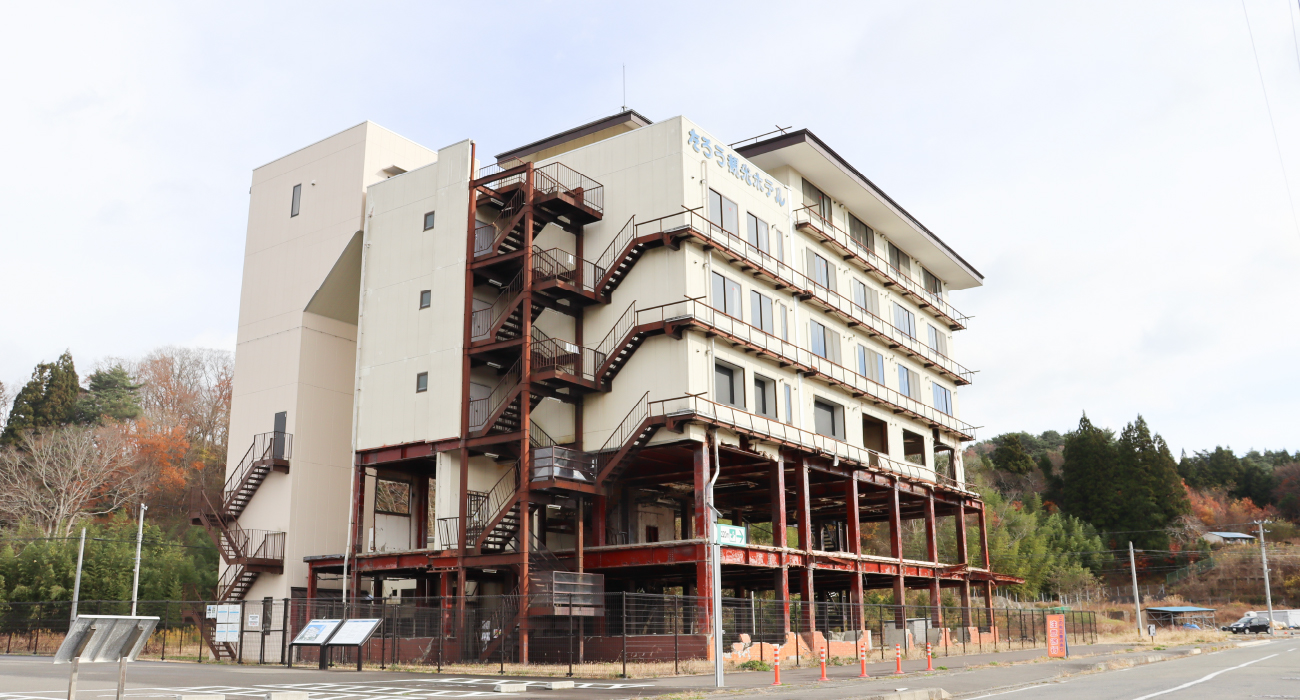
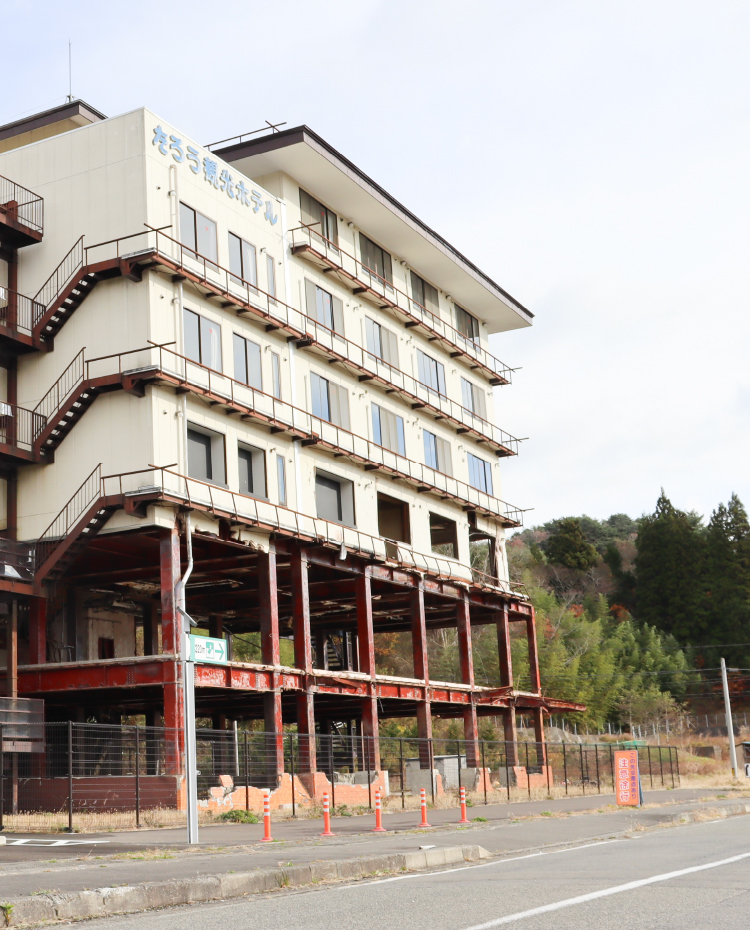
The Taro Kanko Hotel is the only remaining building in a district that was lined with houses. Participants of the Disaster Prevention Tour can view footage of the tsunami filmed from the 6th floor by the hotel's manager at the time.
for the last 115 years has been fighting against tsunamis —A "disaster prevention town" that The current situation of Taro, Iwate

The exposed steel frames
clearly show the impact of the tsunami
The Taro Kanko Hotel was flooded by the tsunami, and few or no walls remain on each floor. The Disaster Prevention Tour in Taro, Miyako City, Iwate Prefecture, includes this hotel, which did not suffer any casualties, in its tour route to convey the horror of tsunamis. In the Sanriku coastal area, which has been repeatedly hit by large tsunamis, Taro was one of the first to put tsunami disaster prevention into practice. In order to allow evacuees to flee to the mountains via the shortest possible distance, the roads in the town are laid out in a grid pattern, and the corners of intersections are cut into the sites, allowing evacuees to turn while still running. The trigger for the town's attention to disaster prevention was the Meiji Sanriku Tsunami of 1896. Taro has been fighting against tsunamis for 115 years.
It took 44 years to build a seawall
—Pioneering Disaster-Resistant City Planning
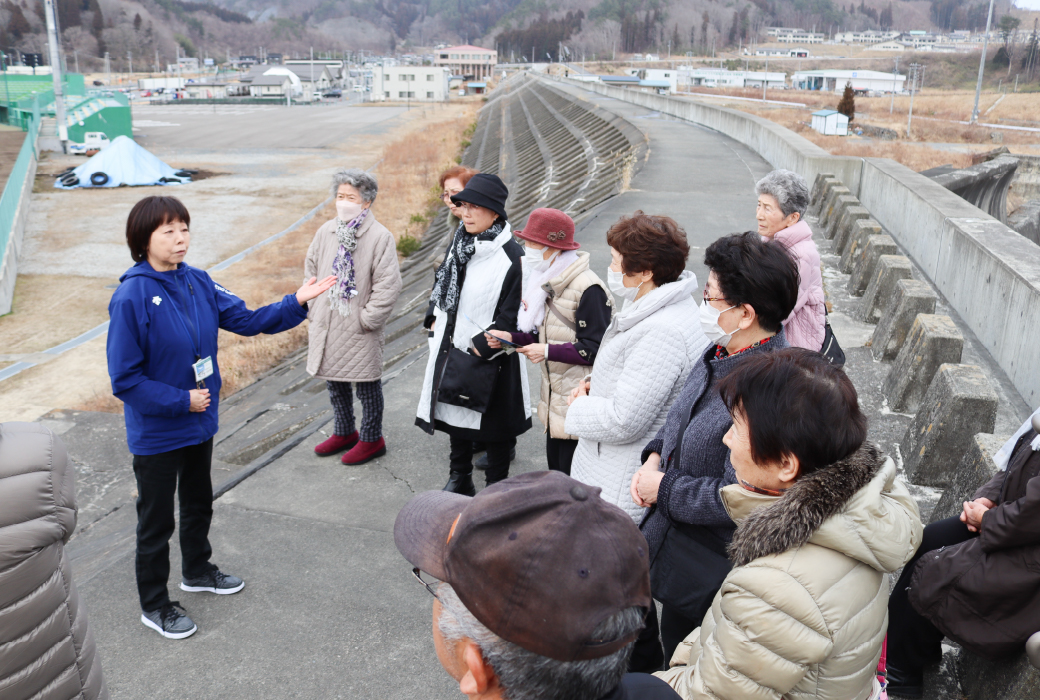
The Meiji Sanriku Tsunami killed 1,859 people in Taro. Although the town rebuilt with only 36 survivors, 37 years later in 1933, 911 people were lost in the Showa Sanriku Tsunami. The village chief at the time decided to build a seawall. After an interruption due to the war, the 2.4-km-long, 10-meter-high seawall was completed in 1979, 44 years after the construction started. Although the Great East Japan Earthquake resulted in tsunamis reaching an average height of 16 meters, the seawall did have a certain degree of mitigation effect. "Part of the original seawall has been restored and strengthened, and together with the seawall that was built after the Earthquake, it has become a double layer of protection. The seawall is meant to buy time for evacuation. I hope that our experience will be useful for the next generation's disaster prevention efforts." says Kumiko Motoda, a guide on the Disaster Prevention Tour.
Melting blissful taste,
blessings of the sea in vivid colors
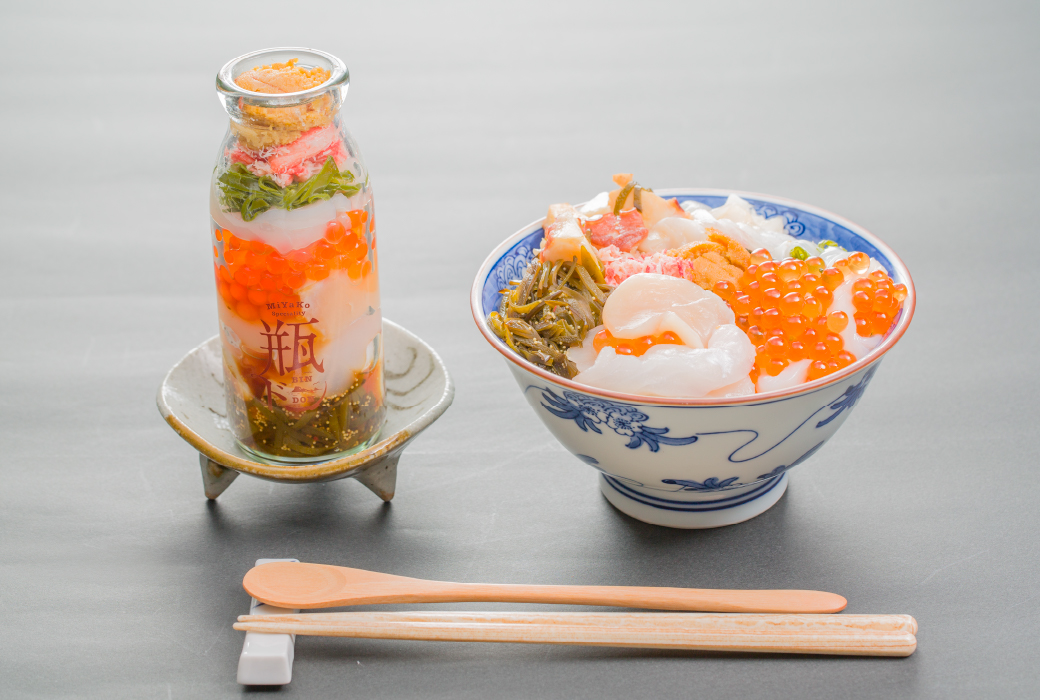
Why did the people of Taro build a huge seawall ahead of the rest of the country? The idea behind this was to protect their lives while living near to the sea. "Bindon (seafood topping for rice served in a milk bottle)," born in October 2018, is its new specialty, full of such love for the sea.
In Miyako City, fresh sea urchins stored in milk bottles are common. Taking this as a hint, colorful seafood, such as salmon roe, squid, sea squirts, and seaweed, were beautifully served up in a milk bottle. Yoshinori Akanuma, executive director of the Miyako Tourism and Cultural Exchange Association, which developed the product with its nine stores in the city, says, "We want people to enjoy the whole bounty of Miyako by pouring it over rice, whether a little at a time or all at once."
Production: Kahoku Shimpo Publishing Co.